

£100 Limit on Contactless Payments to be Lifted
The technology that exists to take our money from us as easily as possible is remarkable. Whilst refunds and payouts can still take several days to come back into our accounts, companies waste no time in being able to get their money.
That is why the likes of contactless card payments have become so ubiquitous, to say nothing of the ability to pay with everything from smartwatches through to the iPhones and Androids that we keep in our pockets.
Now, we’ll be able to pay even more without having to enter our card into a machine, thanks to the removal of the £100 limit.
Why the £100 Limit Was Put in in the First Place
It was in the March of 2021 that the Financial Conduct Authority decided that its rules should be changed to allow for contactless payments to go up to £100. The changes came into effect on the 15th of October, whilst the amount that someone could pay with multiple contactless transactions increased from £130 to £300.
Each bank was entitled to introduce its own limit for how much could be spent contactless without the need for a consumer to enter a PIN, but the exact information for each bank was not published because of security, with £300 set as the upper limit.
@vicderbyshire Regulator Financial Conduct Authority to allow cardholders to set their own individual limits, or switch off contactless entirely. Some banks already offer this #money #finance ♬ original sound – VicDerbyshire
The desire was to give customers more flexibility when it came to making payments for goods and services, whilst speed and convenience were thought to be important at certain times, such as when the family has gone out for dinner.
Between the January and the July of 2021, 60% of all transactions made with debit and credit cards were contactless, so it made complete sense for the FCA to increase the amount that could be spent. Being able to have more choice in how to pay was seen as a key factor behind the decision to increase the limit, whilst safety saw it stopped at £100.
Mobile Payments Are Already Unlimited
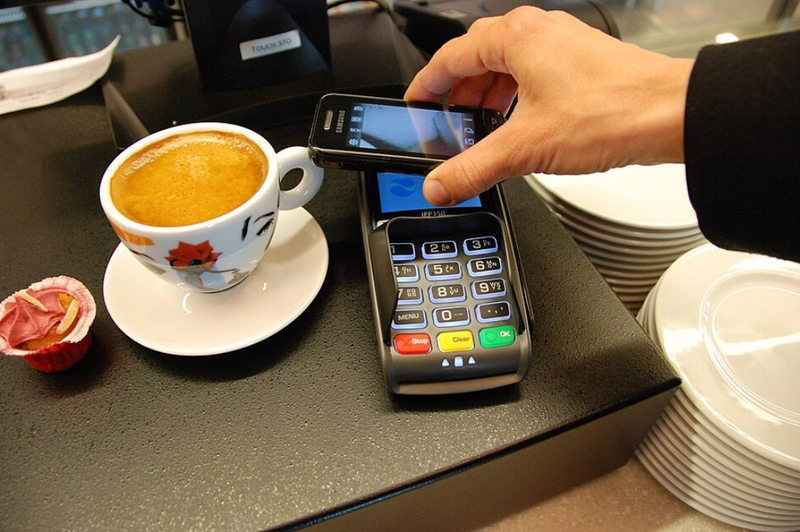
HLundgaard, CC BY-SA 3.0, via Wikimedia Commons

Those that have used the likes of Apple Pay or used their Android decide to make a payment will be aware of the fact that making payments without limits using such means was already unlimited. That is because there are numerous different security methods put in place for that kind of payment, which meant that it was always going to be safer to pay using your phone than a card.
The big fear that many customers will have is around whether or not it will still be safe to carry their card with them if the amount of money that can be spent without the need for a PIN is unlimited.
Using a phone to make a payment typically requires the use of biometrics, which is where the added security comes from. You can’t pay for something using an iPhone, for example, without having your face scanned via Face ID, whilst other phones typically tend to require the use of a fingerprint in order for the payment to go through.
It is obviously the case that you can’t introduce such biometric limits with a standard debit or credit card, which is why it is that certain people are concerned about the security situation of a card suddenly becoming limitless in terms of what can be spent.
Why the Decision to Remove the £100 Limit
Given the clear concerns of some people, the obvious question to ask is why it is that the FCA has decided to remove the limit of £100 that has been in place. The answer comes in the form of convenience, whilst card providers can also then have the ‘flexibility to decide the right limit for them and customers’.
The change won’t come into play until the March of 2026, so there is still time for the various banks to decide how they want to approach things. If a payment is made fraudulently, with a stolen card for example, it is the banks that have to pay their customers back.
This is something that most banks will be wary of, perhaps introducing a lower limit by default and putting their customers in a position where they have to actively choose to have their limit be removed entirely.
Interestingly, the FCA carried out a survey of customers and discovered that there was little to no appetite amongst customers to have the limit removed, fearing that the removal of any kind of limit would lead to ‘spending without thinking’. The Financial Conduct Authority have obviously decided that convenience for people outweighs any potential risks.